
OUTDOOR Public gallery for digital art
...
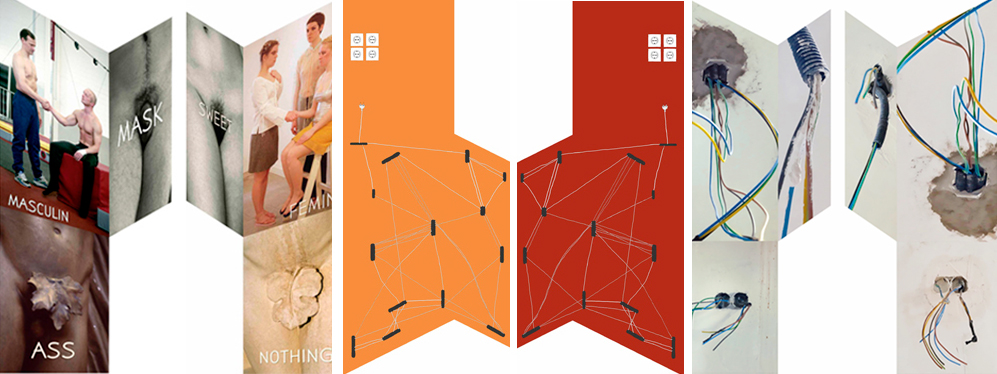
The Public Gallery for Digital Arts project began in 2005 with the aim of questioning the concept of art galleries and museum spaces and integrating it into the urban landscape. The intention was to act with an awareness of "the need to extend artistic discourse to the *Polis*," following the "global village" concept fostered by online technologies. The use of these technologies drives the project's development by enabling active participation from artists across different countries and continents. From the outset, a central idea was that such remote artistic contributions should materialize within the urban environment—specifically via billboards—thereby making visible the intimate relationship between the artwork and the city's everyday space.
Once the design of the street furniture built exclusively for the event had been decided, it became absolutely necessary for the remote artistic interventions to take the form of digital files that would subsequently allow for their manipulation and printing.
Based on these premises, the initial phase of this artistic project—centered on remote artistic participation (from 2005 to 2007)—involved inviting various international artists to submit their work as digital productions. Upon receipt, these digital files were manipulated and printed on materials that allowed them to be mounted on billboards located along the town's pedestrian route.
Subsequently, in 2008, this artistic project of public intervention transitioned to new virtual media, namely the metaverse, using the Second Life digital platform. However, we can easily recognize in this transition of resources and platforms that the initial premises of the Public Gallery for Digital Arts project were maintained, such as those linked to the concept of urban exhibition space and the remote artistic participation enhanced by technologies resulting from globalization.
Below, we present two texts published in the catalogs of the Vila Nova de Cerveira International Biennial (2005/2007), as well as a text regarding the presentation of the project developed for the Second Life platform—which has now been established through the virtual creation of the V5 Foundation – Portuguese Cultural Center.
Second Life
...
As a relational, playful, and global medium, the Second Life platform enabled encounters with various international artists who create art projects within this digital space. As a continuation of the Public Gallery for Digital Arts project in Second Life, invitations were extended to various artist-avatars to create works that were subsequently made available across various regions and public spaces within the platform.
Starting in 2008, two poets—Portuguese Ernesto de Melo e Castro and Brazilian Jorge Luís António—responded to the Public Gallery for Digital Arts project in SL. Their works can be viewed together as part of the SL Foundation V/5 permanent collection, alongside works proposed by digital artist-avatars: Juanita Deharo (Australia), Magix Merlin (Switzerland), Sunflower Aichi (Tunisia/Switzerland), Elro Tuominen (Basque), Vitos Porta (Portugal), Soleil Oh (France), Gracek Adamczyk (Poland), Mirodi Tremor (Taiwan), Moya Janus (France), WIN Iwish (England), Shihi Laa (Scotland), Filthy Fluno (USA), and the SIM Angel Isles urban planner—avatar ZEB BING (architect Pierre-Divier Fouqué of the Nice School).
For the 15th Cerveira Biennial, two artist-avatars with internationally recognized work — the american Filthy Fluno and the frenchman Moya Janus — were invited to present the artistic projects they created for the Public Gallery for Digital Arts in SL.
Their participation was formalized when they were asked to submit high-resolution versions of their projects for printing as final artwork. During the 15th Cerveira Biennial, these digital works will be displayed along the town's pedestrian route on two urban structures designated as the Public Gallery for Digital Arts.
However, we can easily recognize in this transition of resources and platforms that the initial premises of the Public Gallery for Digital Arts project have been maintained—such as those linked to the concept of urban exhibition space and to remote artistic participation enabled by technologies resulting from globalization.